Source: https://www.vietnam.vn/en/lien-doanh-sun-group-haeco-toyota-tsusho-japan-airlines-dau-tu-360-trieu-usd-tai-san-bay-van-don

Four companies have reached an agreement to establish a joint venture to develop an aircraft maintenance, repair, and overhaul (MRO) complex at Van Don International Airport in Quang Ninh province.

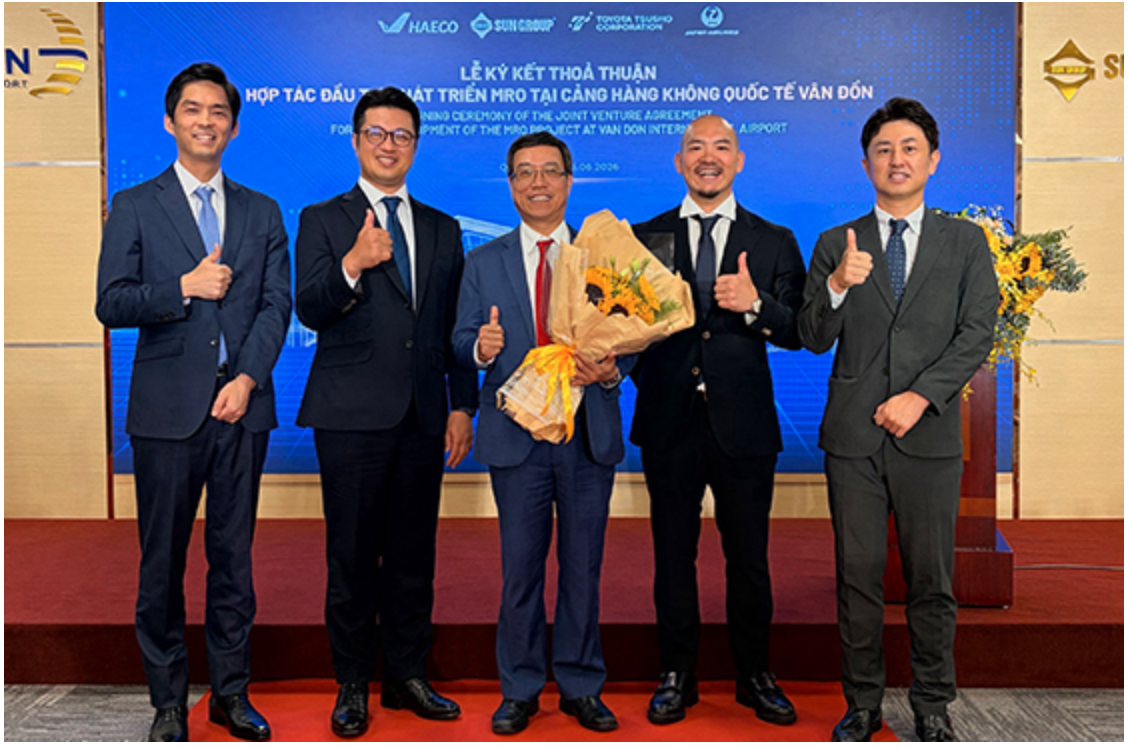
The joint venture includes Hong Kong Aircraft Engineering Company Limited (HAECO), Sun Group , Toyota Tsusho Corporation, and Japan Airlines Co., Ltd., with a total investment of approximately US$360 million.
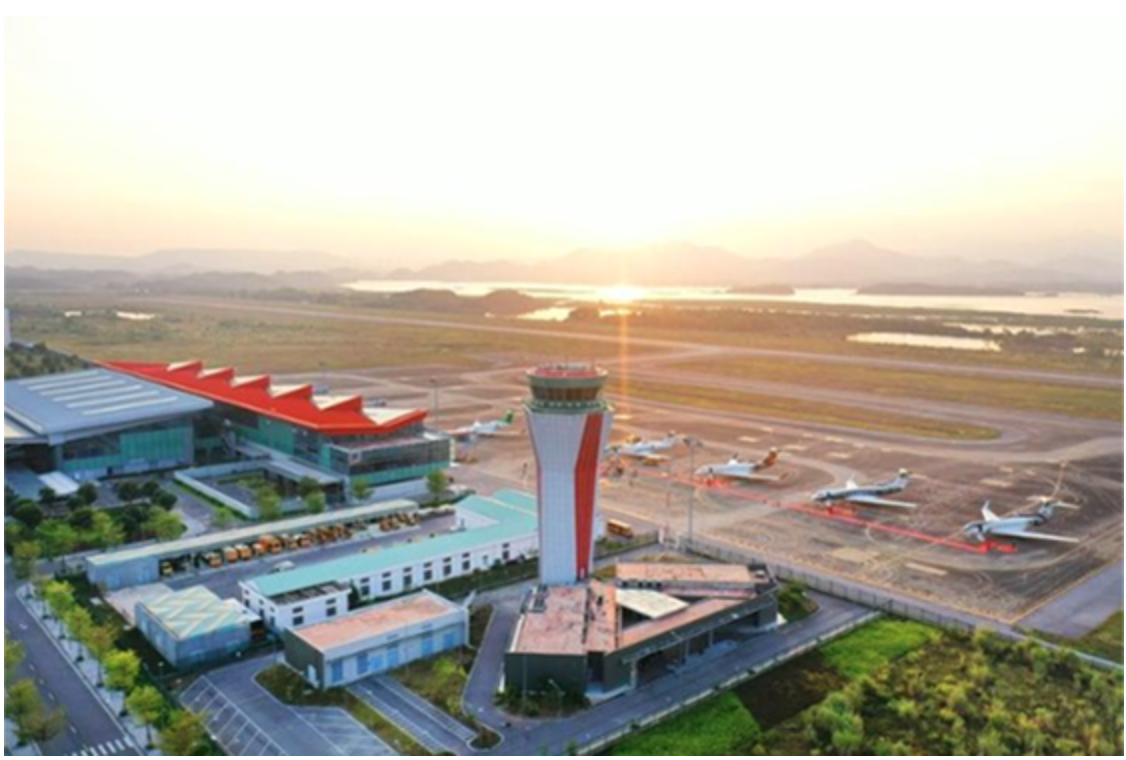
Van Don International Airport, Quang Ninh

Enhancing aircraft maintenance capabilities

Southeast Asia is one of the fastest-growing aviation markets in the world . In Vietnam, the increasing demand for air transport is projected to drive aircraft maintenance service demand at a rate exceeding the growth of the aircraft fleet. Meanwhile, MRO capacity is currently concentrated in a few countries such as Singapore, Malaysia, and Thailand.
According to the Vietnam Civil Aviation Authority, Vietnam’s MRO (Maintenance, Repair, and Operations) market is projected to reach approximately US$7.4 billion by 2030. However, current domestic maintenance capacity has not kept pace with the growth in demand, making the expansion of maintenance capacity an urgent requirement.
This project is being implemented to address the aforementioned structural supply-demand imbalance, while simultaneously enhancing Vietnam’s aircraft maintenance capabilities and strengthening its technical self-reliance.

Signing ceremony for the cooperation agreement on investment and MRO development at Van Don International Airport
In addition, Quang Ninh province and the Van Don area are actively attracting high value-added industries alongside tourism, services, and logistics.

With its strategic location and advantageous transportation infrastructure, this area is expected to become a new engine of growth.
The project will also contribute to local economic development by creating jobs and promoting the formation of related industries.
The project aims to meet the growing demand for aircraft maintenance in Southeast Asia, while contributing to the development of Vietnam’s aviation industry and strengthening the regional aviation value chain.

Let’s develop a complex that meets international standards.

Sketch of the aircraft maintenance, repair, and overhaul (MRO) complex at Van Don International Airport, Quang Ninh province – Photo: SG According to the agreement, the four companies will jointly develop an internationally standardized MRO complex on a plot of land approximately 20 hectares in size at Van Don International Airport.
This complex has the capacity to accommodate four wide-body aircraft and two narrow-body aircraft simultaneously, and is expected to become one of the largest aircraft maintenance centers in Vietnam.
The project is expected to become operational in 2028 and create approximately 1,000 jobs (including around 200 foreign professionals), contributing to the development of high-quality human resources for the aviation industry.
The project brings together the strengths of leading businesses in the aviation, technical maintenance, and industrial sectors. By combining these strengths, the partners aim to build a highly competitive and internationally recognized MRO center.

HAECO: Providing advanced maintenance technology and operational expertise as a global MRO service provider.

Sun Group: Leveraging its experience in developing airports and aviation-related infrastructure in Vietnam.

Toyota Tsusho: Contributing its expertise in global supply chain development and management, along with its experience in fostering cross-border business alliance models.

Japan Airlines: Providing operational and maintenance expertise based on safety and quality, while supporting human resource development.
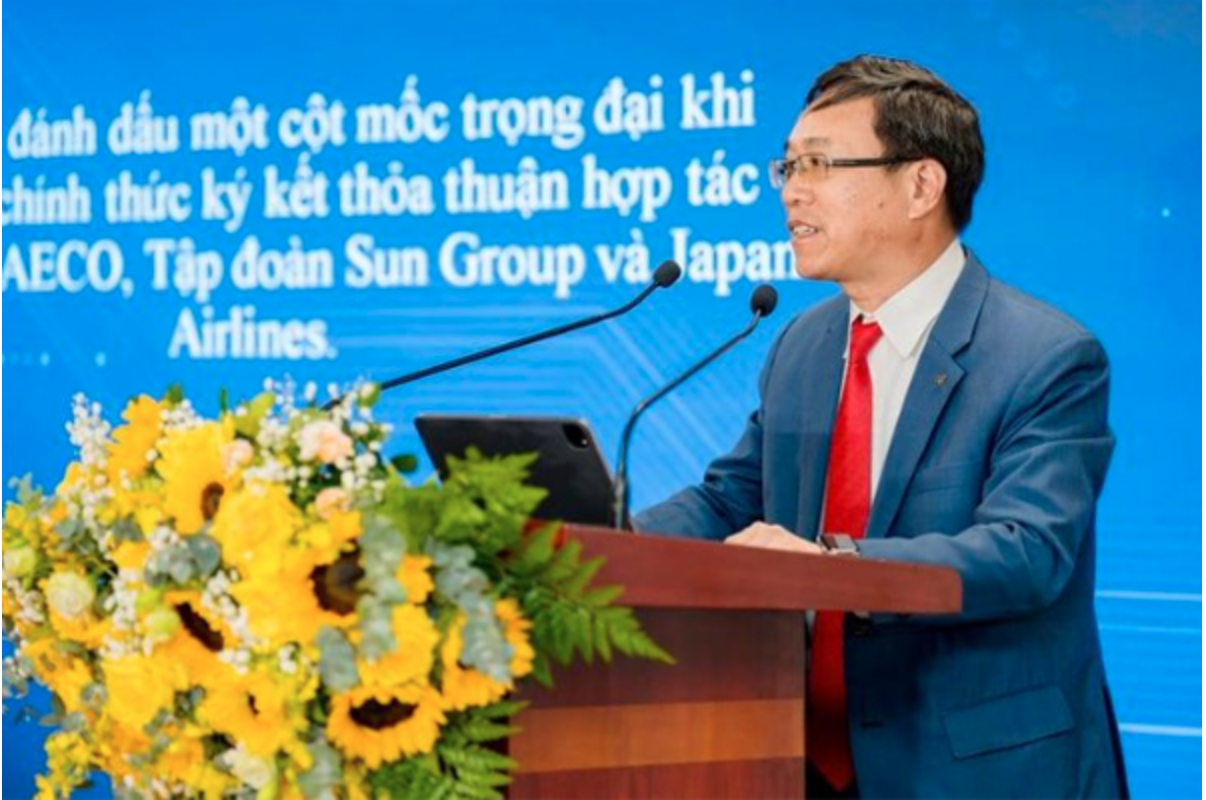
Mr. Junmin Zhao – President of Asia Pacific Region, Toyota Tsusho Corporation

This MRO complex is expected to raise Vietnam’s aircraft maintenance capabilities to international standards, while also creating a foundation for reducing reliance on overseas maintenance facilities. The project is also expected to support Vietnam’s deeper participation in high value-added segments of the global aviation value chain.
Through this project, the four companies will combine aviation infrastructure, maintenance technology, operational capabilities, and industry networks to contribute to building a sustainable aviation ecosystem and promoting the development of the aviation industry.

Toyota Tsusho Corporation is a diversified trading company under the Toyota Group. Toyota Tsusho operates globally in eight business areas: Metal+, Circular Economy, Supply Chain, Mobility, Green Infrastructure, Digital Solutions, Lifestyle, and Africa. Building on its foundation in the automotive industry, the company is expanding its operations into growth areas such as renewable energy, resource recycling, and business activities related to Africa, thereby contributing to solving social problems and realizing a sustainable society.
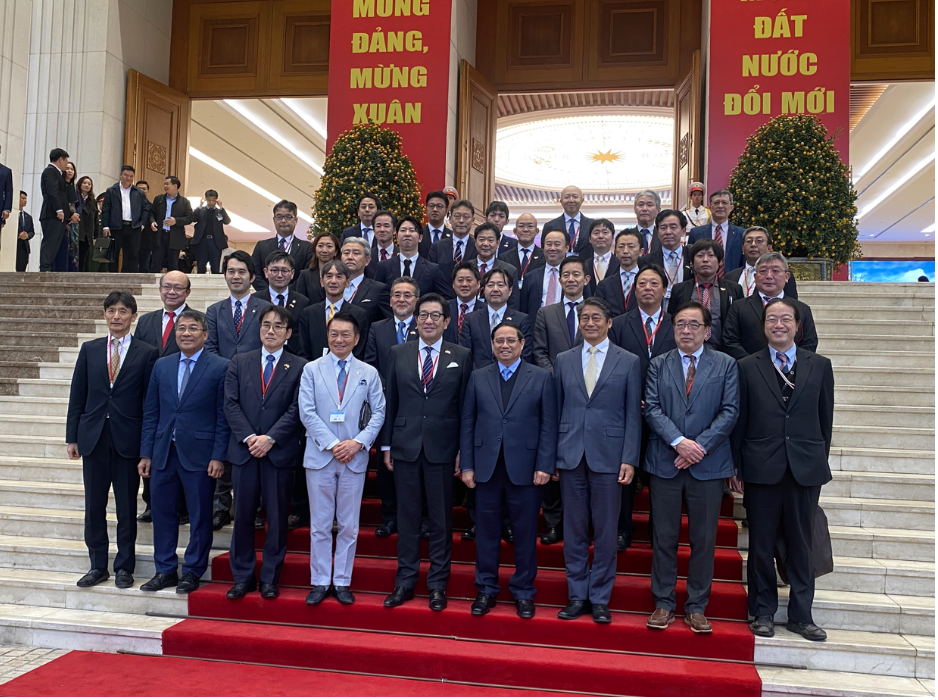
On the afternoon of February 9, 2026 (Monday), at the Government Headquarters, Prime Minister Pham Minh Chinh received a delegation representing 37 Japanese enterprises, corporations, and organizations, led by Mr. Keita Ishii, Chairman of the Japan–Mekong Economic Committee and President & CEO of Itochu Corporation. Also attending was Mr. Ito Naoki, Ambassador Extraordinary and Plenipotentiary of Japan to Vietnam.

Mr. Kurata, General Director of Toyota Tsusho Vietnam, was a member of the delegation and participated in the meeting with Prime Minister Pham Minh Chinh.

Key points from the meeting: 

“At the meeting, Prime Minister Pham Minh Chinh emphasized that Vietnam is in a breakthrough stage of development and has set the goal of achieving ‘double-digit’ growth during the 2026–2030 period in order to realize two objectives: by 2030, becoming a developing country with upper-middle income; and by 2045, becoming a developed country with high income. Therefore, enhancing competitiveness, restructuring the economy, and fully leveraging opportunities from international economic integration to achieve sustainable development goals are of utmost importance.

The Prime Minister stressed the need to strengthen training efforts; he requested universities to continue training engineers that Japan requires—not only in terms of knowledge but also in law, culture, and foreign languages.

“Training must be further strengthened, cooperation made more open, with more favorable visa and work permit procedures. At the same time, the quality of Vietnam’s workforce must be improved. Universities such as Hanoi University of Science and Technology, Fenica University, FPT University… should focus on fields that Japan is concentrating on, such as semiconductors, artificial intelligence, climate change mitigation, and green development, to further promote the linkage between the two economies. Based on the excellent political relations, strong people-to-people exchanges, and shared interests between the two countries” the Prime Minister emphasized”

Thủ tướng tiếp đoàn 37 doanh nghiệp, tập đoàn và tổ chức của Nhật Bản 

(Source: vtcnews)

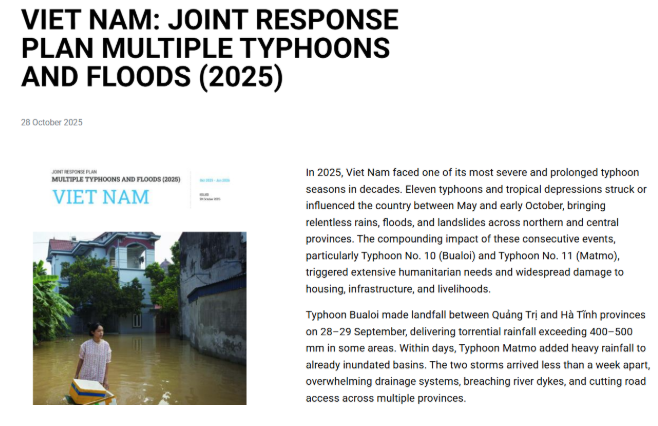
The rain was relentless. For days, Northern Vietnam was battered by a trio of typhoons—Ragasa, Bualoi, Matmo—leaving behind a trail of devastation. In some places, rainfall reached an astonishing 857mm in just a few days. Rivers overflowed, roads vanished, and entire communities were submerged. The statistics were staggering: at least 85 people dead or missing, over 300 lives lost, 189,000 affected, and economic losses in the billions.

https://vietnam.un.org/en/304102-viet-nam-joint-response-plan-multiple-typhoons-and-floods-2025

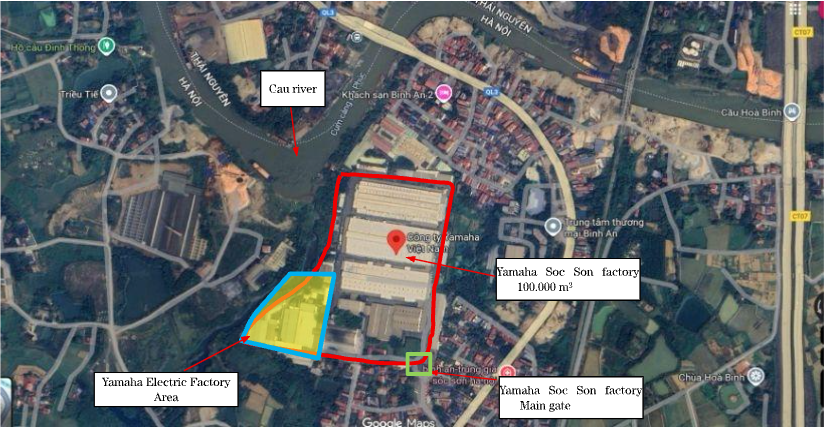
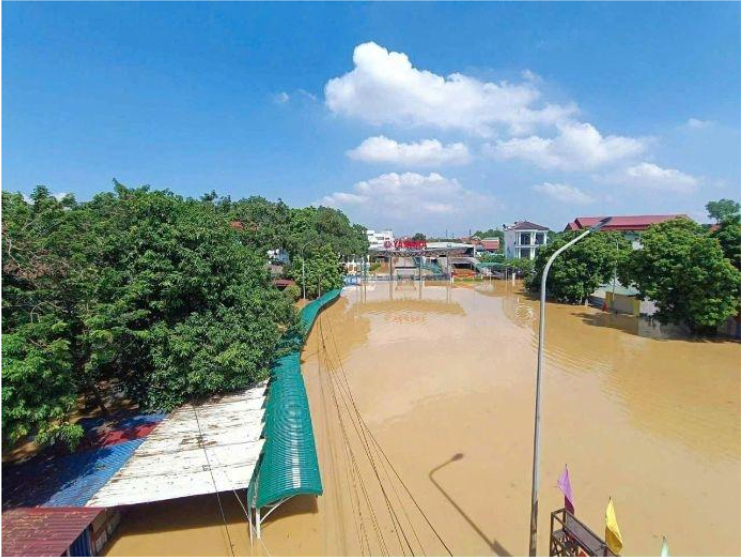
At the Yamaha Electronic (YEVN) factory in Soc Son, the situation was dire. Floodwaters surged to nearly a metre, forcing the entire production line to a halt. The mighty Cau River, usually a tranquil backdrop, now pressed menacingly against the factory’s back wall. This sudden halt didn’t just affect the factory itself—it threatened the supply of components to other Yamaha plants, with significant economic impact.

Caption: Satellite view of Yamaha factory; the Cau River runs directly behind the plant.

Caption: Yamaha factory main gate flooded during the peak of the event.

Yamaha responded promptly by dispatching a team of experienced Japanese specialists, all with backgrounds in managing natural disasters at factories worldwide. This incident, however, marked the first occurrence of such an event at Yamaha Vietnam. Although the local Vietnamese staff possessed strong skills and dedication, they had not previously encountered a crisis of this nature and therefore relied heavily on the expertise of the visiting specialists.

Upon arrival, the factory environment was tense yet optimistic. The power supply remained unstable, and air conditioning was unavailable. Documents and paperwork were spread throughout the yard to dry in the sun, clearly illustrating the extent of the disruption. Because of the security measures at the factory, I was unable to take any pictures; however, the environment appeared somewhat cluttered.

Communication was one of the biggest challenges. The Japanese specialists and the Vietnamese team did not share a common language, and important information was often slow or unclear. I had to step in constantly — not just to translate words, but to make sure both sides truly understood what the other was trying to say and what needed to be done first.

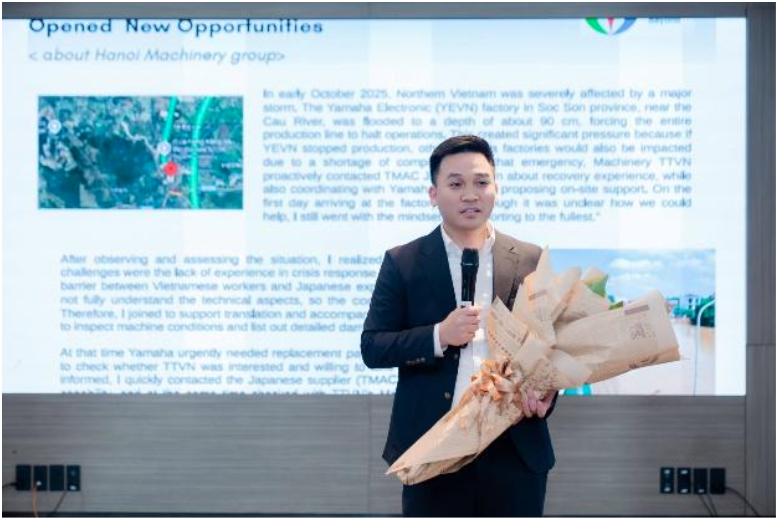
At the same time, the TTVN Machinery team quickly reached out to TMAC Japan to seek technical advice and worked closely with Yamaha Motor to arrange on-site support. Everyone shared the same simple goal: to get the factory running again as soon as possible.

On the first day, the pressure was intense. The problems were not only with damaged equipment, but also with stress, uncertainty, and miscommunication. In many meetings, I found myself bridging more than just language — I had to convey the urgency, the concerns, and sometimes even the emotions on both sides so that we could move forward together.

The team meticulously assessed the flooded shop floor, cataloguing all damaged machines and components. When Yamaha requested urgent replacement parts, immediate contact was made with TMAC Japan to confirm supply availability, while import procedures were expedited in collaboration with our Machinery Department. As a result of effective cross-border teamwork, a quotation was delivered to Yamaha within one day, which was promptly accepted.

A command center was set up in a small 10-square-metre space for coordinated recovery actions with Japanese specialists. I was proud to join YMC members there as real teamwork developed.

Initially, interactions with the Yamaha team were formal and reserved; however, collaboration fostered increasingly open and collegial communication. Notably, opportunities arose to introduce TTVN’s capabilities and other services, further strengthening relationships and integration with the broader Yamaha organization.

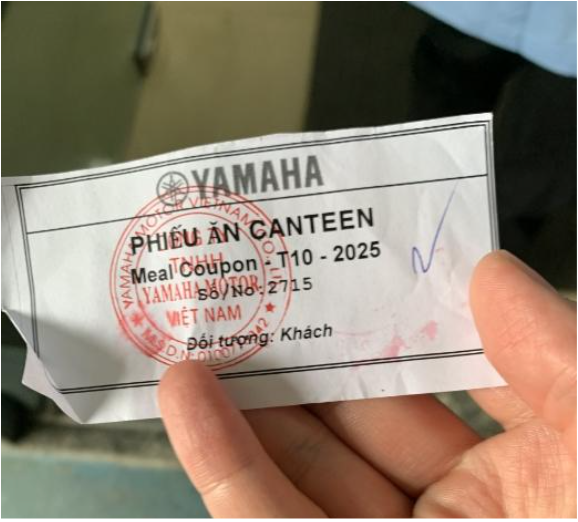
Caption: Meal coupon at Yamaha—being welcomed like a member and bonding

over close conversations.

A special memory was receiving a meal coupon at the Yamaha factory—being welcomed like a member; shared meals and close conversations helped me grasp the team’s culture and solidarity.

As the days went by, trust grew. Whenever a new issue arose, the Yamaha team would come to me first—not just for translation, but for advice and partnership. Through these conversations, I was able to introduce colleagues from other departments, opening doors for future collaboration.

Looking to the future, this experience has opened up new doors for collaboration between TTVN and Yamaha. Through the trust and understanding built during the crisis, I was able to introduce colleagues from other TTVN departments and highlight the broader capabilities of our company. These conversations have already sparked interest in areas such as plastics, chemicals, metal, supply chain where TTVN can provide further value to Yamaha. I am confident that the relationships and mutual respect forged during this challenging time will lead to even stronger partnerships and innovative projects in the years ahead. What began as a response to adversity has become the foundation for long-term cooperation and shared success.

Looking back, this experience was a true example of Toyota Tsusho’s DNA:

  • Humanity: Supporting each other, building trust, and growing closer through shared challenges.
  • Gembality: Being present at the site, seeing the real situation, and acting together.
  • Beyond: Turning a crisis into an opportunity to strengthen relationships and create new possibilities for the future.

From a difficult situation, we built not only solutions, but also friendships and new opportunities—proof that even in adversity, collaboration and openness can lead to lasting success.

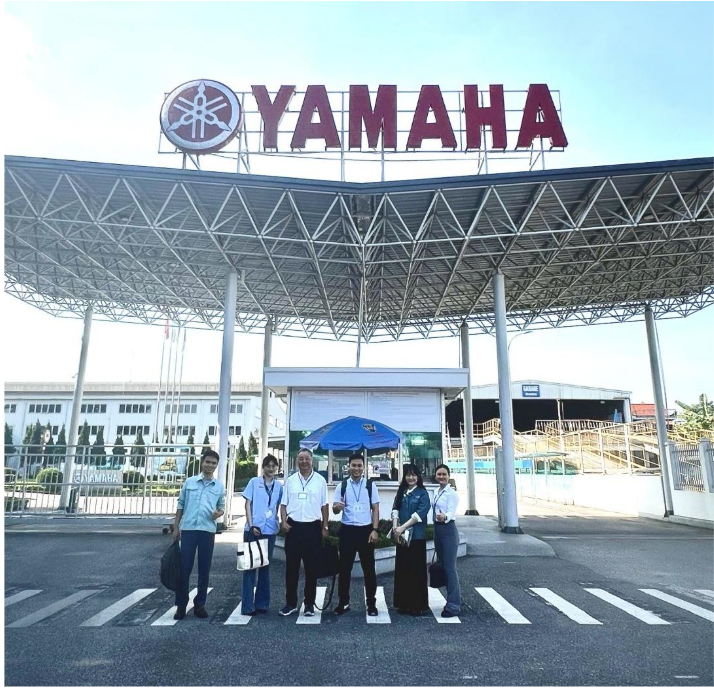
To conclude, I’d like to share a photo taken at the main gate of the Yamaha Soc Son factory (where the photo above is all river water in October) in July 2025 during our factory visit.

From left to right: Mr. Tuan Anh (TTVN), Ms. Hien (YMVN), Mr. Yamada (TMAC), Author,

Ms. Quynh (TTVN), and Ms. My (TTVN).

From Floodwater to Trust – A Gemba Story at Yamaha Vietnam

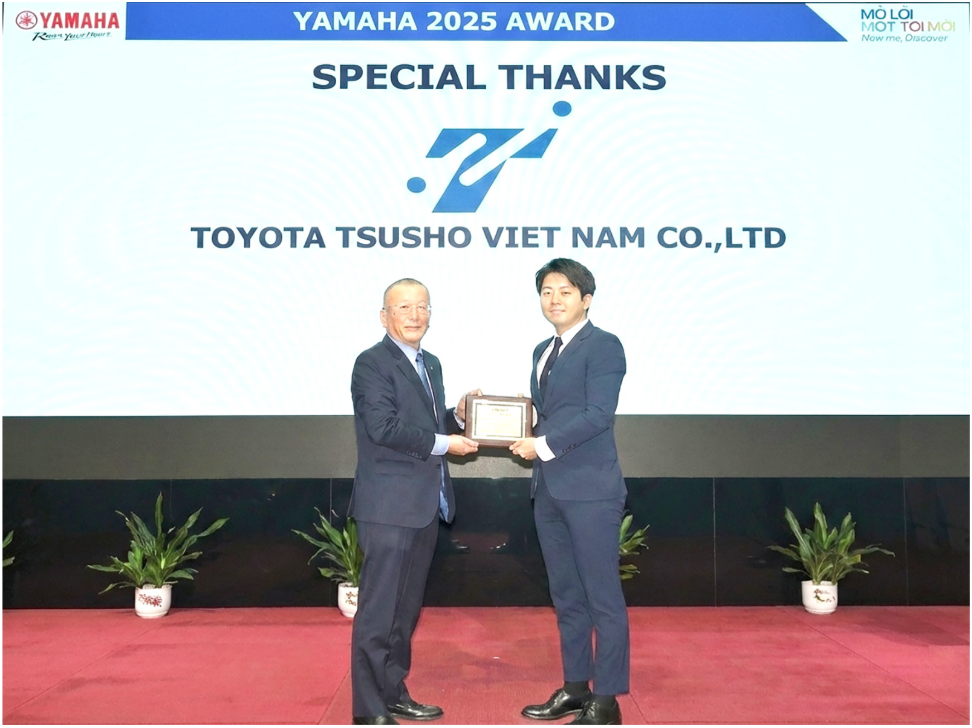
(January 23rd, 2026, “Special Thanks” award from Yamaha)

From left to right in the photo: Yamaha Motor Vietnam, General Director, Okutani-san and TTVN D-SBUH Shimayama-san.

Contributor

Company:Toyota Tsusho Vietnam

Dept:Green Infrastructure Div, Machinery Dep.

Name:Trinh Ngoc Chuc

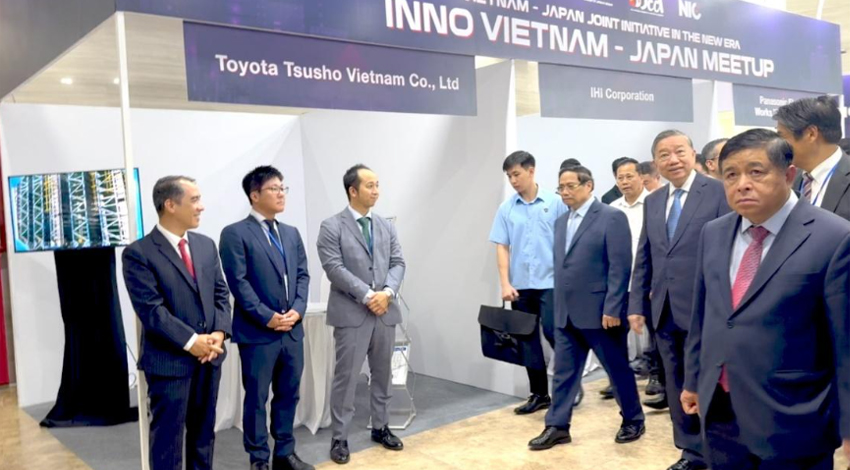
Promote our CN activities at the Vietnam International EXPO
(From left, TTVN Chuc Machinery GL, Sasaki GI Divion CDO, Takahashi (contributor of this article), Hai Power Project Development GL)
Event Date: October 1, 2025 [Vietnam] Promote our CN activities at the Vietnam International EXPO
(From left, TTVN Chuc Machinery GL, Sasaki GI Divion CDO, Takahashi (contributor of this article), Hai Power Project Development GL)
Promote our CN activities at the Vietnam International EXPO (From left, TTVN Chuc Machinery GL, Sasaki GI Divion CDO, Takahashi (contributor of this article), Hai Power Project Development GL)
Event Date: October 1, 2025 [Vietnam] Promote our CN activities at the Vietnam International EXPO
(From left, TTVN Chuc Machinery GL, Sasaki GI Divion CDO, Takahashi (contributor of this article), Hai Power Project Development GL)

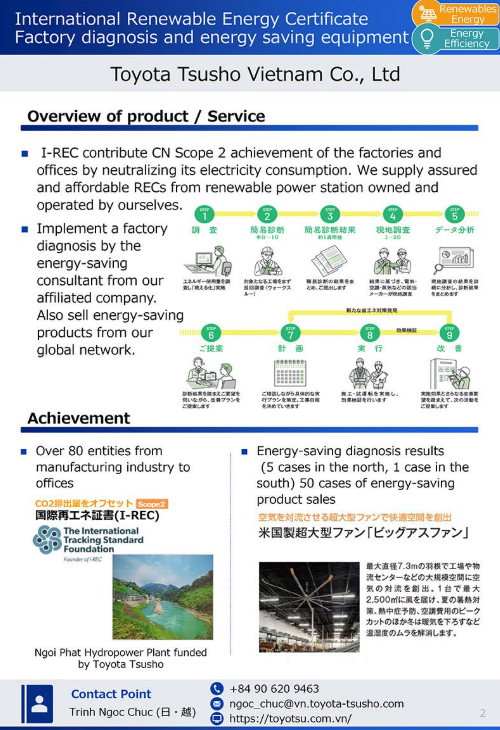
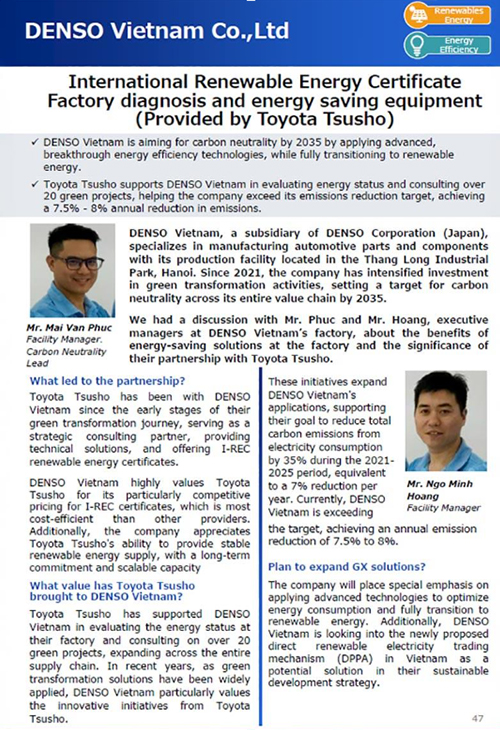
Toyota Tsusho Vietnam Co., Ltd. (TTVN) and DENSO MANUFACTURING VIETNAM CO.,LTD. (DMVN) jointly conducted CN activities, which were featured on Decarbonization Business Catalogue published by JETRO Hanoi Office

In addition, from October 1 to 3, TTVN Green Infrastructure Division promoted our CN activities at the Vietnam International EXPO held in Hanoi. The event was attended by various dignitaries, including Secretary General and the Prime Minister of Vietnam.
TTVN and DMVN have been collaborating on various CN efforts such as factory energy audits, introduction of energy-saving equipment, and I-REC (International Renewable Energy Certificate). In the Decarbonization Business Catalogue, our cooperation history and ripple effect are highly regarded by DMVN as “Toyota Tsusho has been with DENSO Vietnam since the early stages of their green transformation journey, serving as a strategic consulting partner.”
Moving forward, TTVN will continue to support the realization of carbon neutrality for major customers and MUST DO companies by providing comprehensive solutions that combine renewable energy, energy conservation, and self-generation.

Related Link: JETRO Website
https://www.jetro.go.jp/vietnam/activities/decarbonization_vietnam.html

VIP tour (from center to the right Prime Minister Mr. Phạm Minh Chính, General Secretary Mr. Tô Lâm,
Deputy Prime Minister Mr. Nguyễn Chí Dũng)
VIP tour (from center to the right Prime Minister Mr. Phạm Minh Chính, General Secretary Mr. Tô Lâm, Deputy Prime Minister Mr. Nguyễn Chí Dũng)
Decarbonization business catalogue (Introduction of our CN activities)
Decarbonization business catalogue (DMVN interview)

■ Strike of once-in-a-century super typhoon

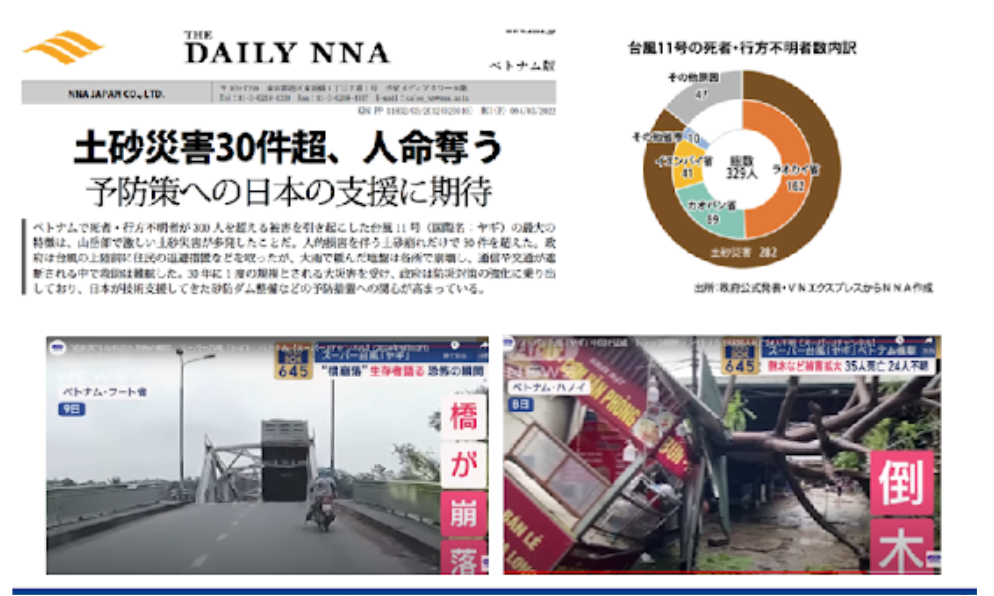
Saturday September 7 2024, Typhoon No.11 (international name: Yagi) struck northern Vietnam, including Hanoi. It was classified as a “super typhoon” the strongest level in the U.S. Marine Joint Typhoon Warning Center, with maximum wind speeds of 67 m/s (240 km/h) and central pressure of 915 hPa . Typhoon Yagi caused unprecedented disasters throughout Southeast Asia, resulting in the loss of more than 300 precious lives and economic losses of over 400 billion yen in Vietnam, and recorded as once-in-a-century tragic typhoon.

Heavy winds blew down the trees and flood damaged across central Hanoi city and threatened the lives of citizens. Landslides caused serious damage in the northern mountainous areas of Vietnam and a wide range of industries including agriculture, manufacturing and logistics were severely damaged especially in Lao Cai Province, which particularly has vast mountainous area. It was inevitable for the hydropower station, located in the province, owned and operated by us to avoid the disaster.

Caption: News report of Typhoon Yagi

■ Record floods, landslides and isolation

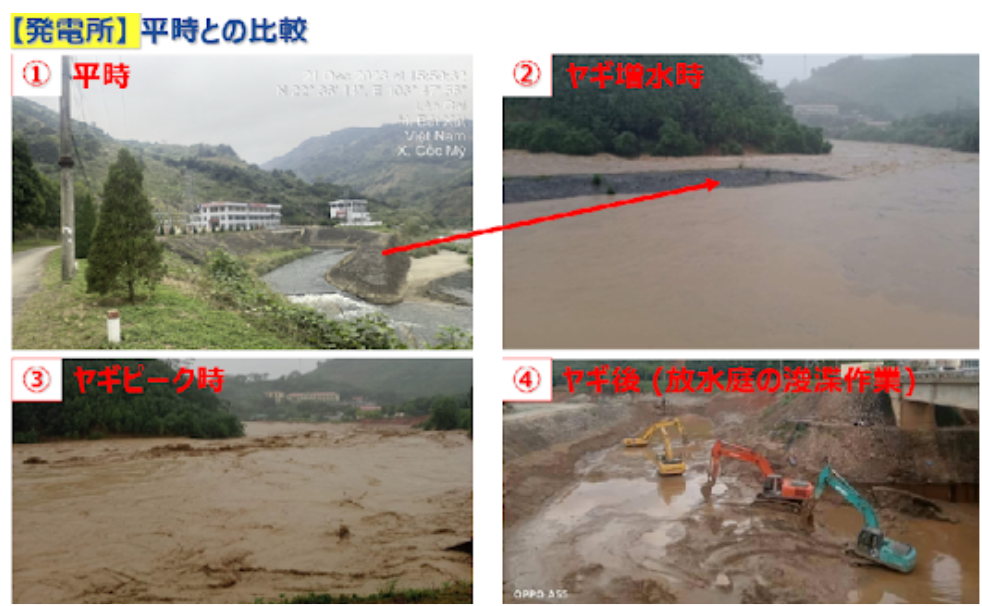
On Sunday, September 8, Typhoon Yagi hit the Noi Phat hydropower station. As a result of torrential rainfall equivalent to 25% of the annual rainfall, a record flood of up to 1,900 m3 per second (equivalent to the volume of four swimming pools at elementary and junior high schools in Japan) flowed into the dam. The dam had stopped water intake for power generation prior to flood approach to ensure the safety of the facilities by utilizing dam operation optimization system newly introduced and installed after our investment in the project, however, the unprecedented tremendous amount of inflow caused the dam to start emergency discharge. At the power plant located downstream of the dam, muddy water containing sediment overflowed 8m high concrete wall and flowed into the power plant’s water discharge yard. Fortunately, there were no human casualties or damage to the facilities due to annual disaster countermeasure training and advance preparations for the attack of Typhoon Yagi.

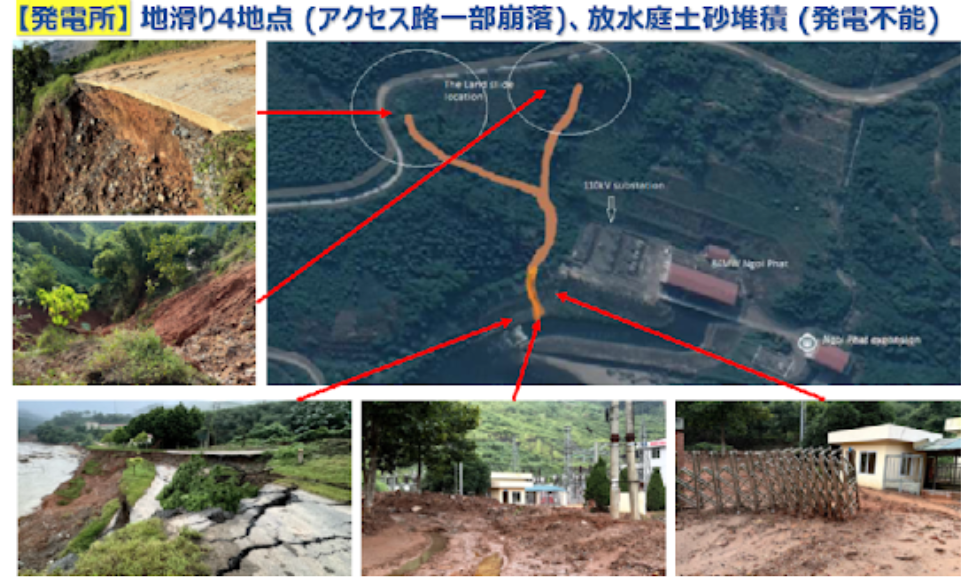
On the following day, Monday September 9, while heavy rain continued to pour and flooding response was still ongoing, landslides occurred at three different locations near the power plant and mudslides covered near the power plant. An emergency recovery support team, including the top management of the project company were dispatched from Hanoi to the site, but part of the access route to the power plant collapsed and forced the team to detour, which caused additional time to access the site. Furthermore, a landslide in the province caused the collapse of communications tower covering the surrounding area and  communications with the site were interrupted. The power station was isolated under extreme circumstances.

While praying for the safety and security of all power station employees, national staff and I worked closely with the power station as well as our head office to grasp the latest situation of the power station, and plan, discuss, and support the execution of recovery measures. We thought everyday about what we should do and what we can do and put it into action.

Caption: Power plant before and after Typhoon Yagi

Caption: Landslide near the power plant after Typhoon Yagi

■Recovery support dispatch, DNA questioned

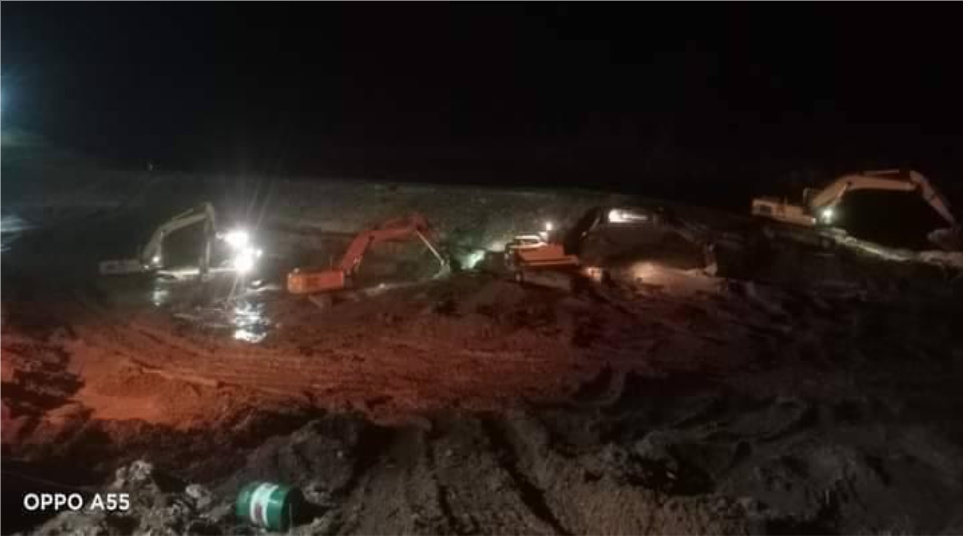
On Tuesday September 10, a new landslide occurred near the power plant while the rain continued to fall. Fortunately, there was no damage to the power plant’s staff or facilities, but the power station could not resume power generation due to some of the facilities being clogged with muddy soil. The power station requested emergency assistance from local authorities and construction companies to supply bulldozers for dredging the muddy soil, however, providing recovery support to the public was the top priority. The power plant was forced to dredge the muddy soil using a bucket brigade method with the five excavators, which after struggle they could secure.

While we were exerting our effort together as a team to restore power supply to the area as soon as possible, two national staff voluntarily offered to be dispatched to the site for on-site 3recovery support. Both national staff are certified electrical engineers with over 20 years of experience in the hydropower generation business, and it was clear that they were well-suited for the assignment. Also, from the course of daily discussion with the project company and shareholding partner management, I was aware of the high expectation for our on-site support from partners. Further, I myself understood well that dispatching those two national staff members were the overall optimal approach. However, site were under the risk of floods and intermittent landslides. Caught between the top priority of ensuring the safety of my subordinates and restoring the power generation at the earliest to deliver power to the area, I suffered in making a decision that could possibly affect the lives of my subordinates and their families. After many discussions with the national staff and upper management about safety measurement and respecting each team member’s strong will, the decision were made to dispatch our emergency recovery support team with safety as top priority. The discussion was also a moment that questioned the meaning of humanity – how we should live as people.

As a result, they arrived safely on the scene the following day, Wednesday September 11 and worked closely together with the project company to restore power generation. Under extreme circumstances without communication network, both exerted best efforts to diagnose the situation accurately on-site and execute countermeasures, deriving best possible restoration plan. Their actions were true symbol of Gembality – the ability to make decisions and take action rooted in the field .

Caption: Dredging work by excavators (bucket brigade method, continued recovery work throughout nights)

■ Beyond—light at the end of the tunnel 

As a result of project company and shareholders pulled through this unprecedented historic disaster together, the power plant was able to resume power generation in just 10 days and provided stable power to the local community, supporting the foundation of recovering people’s lives, and underpinned the restoration activities throughout Lao Cai Province. The ordeal of Typhoon Yagi brought many disasters and difficulties, confronted the unavoidable reality of the coexistence of renewable energy power plants with nature to achieve carbon neutrality. However, the story of those involved who overcame these circumstances was more than mere disaster countermeasures. In the midst of adversity, the project company and shareholders supported each other, pooled their wisdom as one and enhanced trust, and took a step forward together towards new Beyond – leading to more resilient future disaster countermeasures.

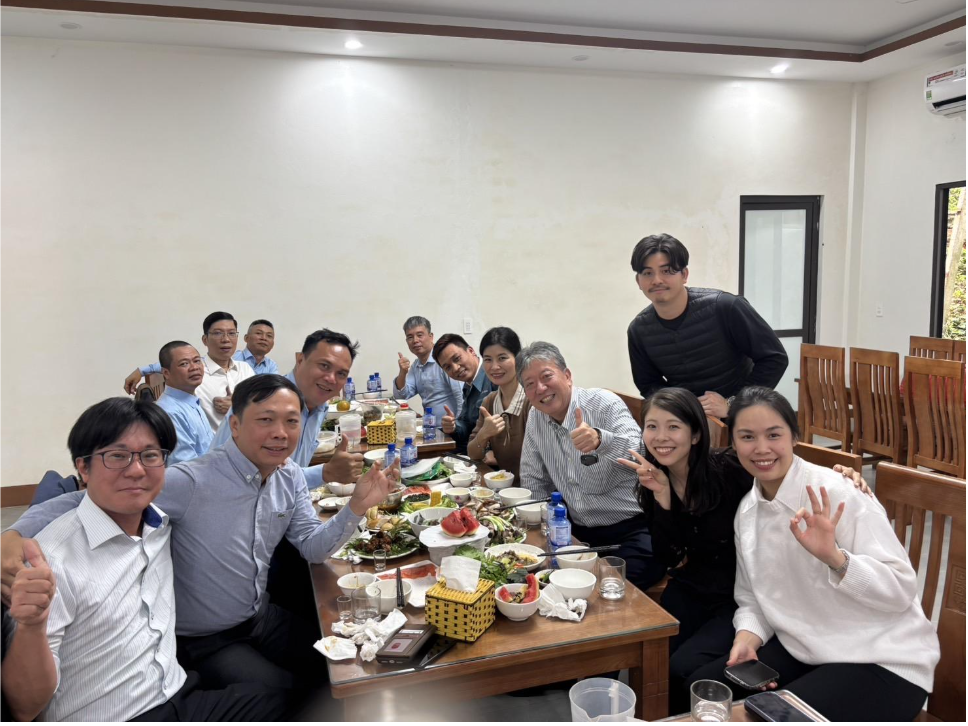
Caption: 2024 Dec.  At power station canteen with power station staff (our family) (front row,

third from right: Kunihiro division CEO)

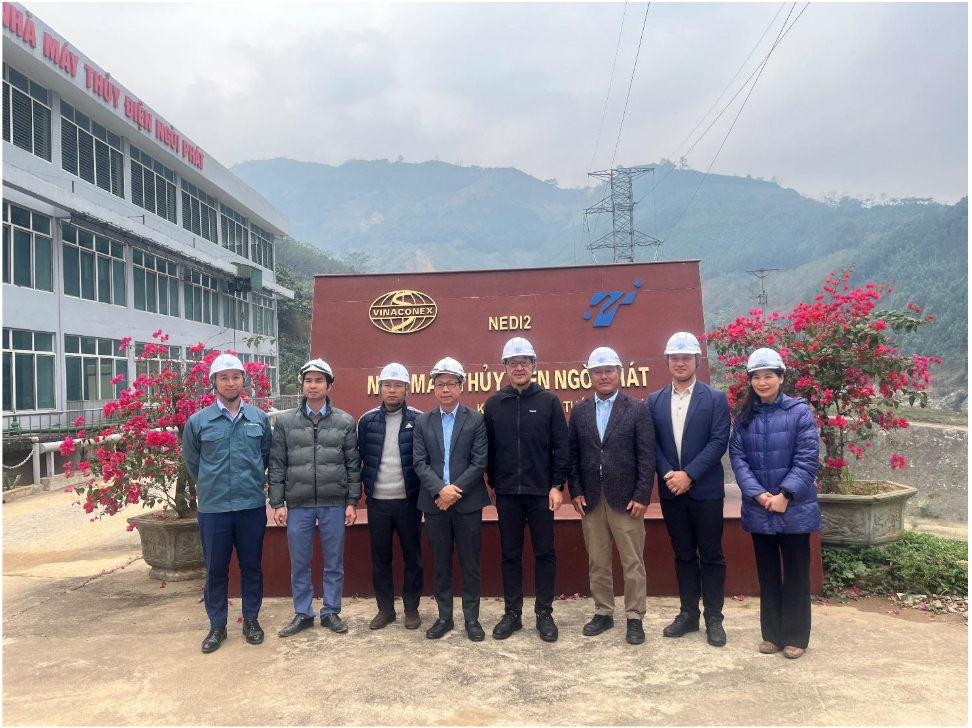
Caption: 2025 Feb.  Encourage the reconstruction at the power house (front row from left, author,

Phong Deputy Director, Truong General Manager, Imai Executive Vice President (at the time),

TTVN Miyajima General Director (at the time), Kurata Next Mobility Development Department General Manager

(at the time), Linh secretary)

Scroll Top