
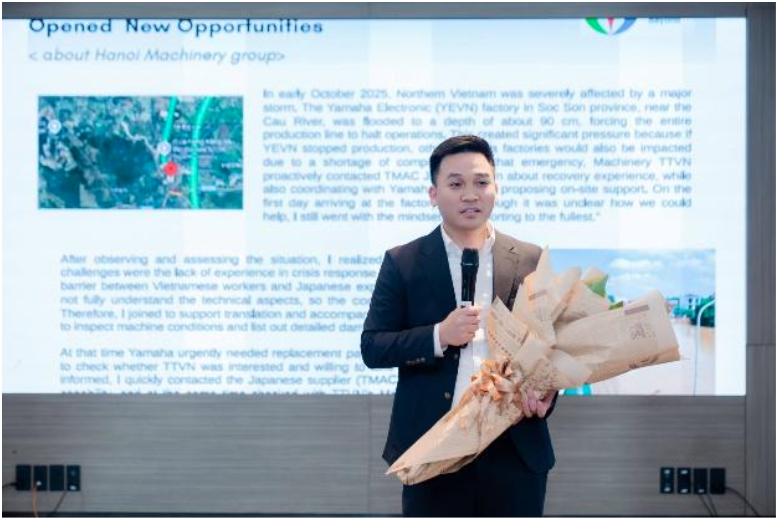
The rain was relentless. For days, Northern Vietnam was battered by a trio of typhoons—Ragasa, Bualoi, Matmo—leaving behind a trail of devastation. In some places, rainfall reached an astonishing 857mm in just a few days. Rivers overflowed, roads vanished, and entire communities were submerged. The statistics were staggering: at least 85 people dead or missing, over 300 lives lost, 189,000 affected, and economic losses in the billions.
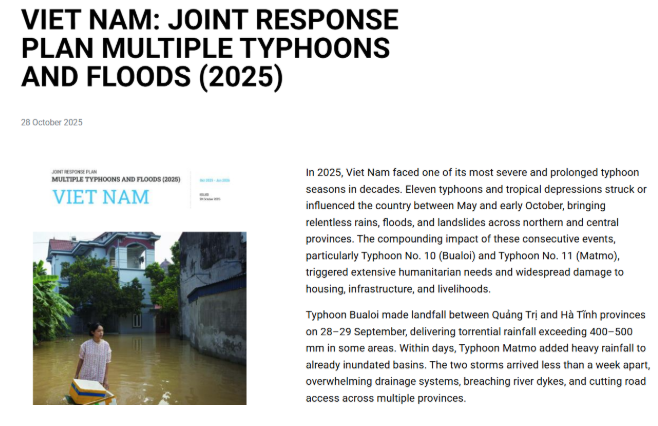
At the Yamaha Electronic (YEVN) factory in Soc Son, the situation was dire. Floodwaters surged to nearly a metre, forcing the entire production line to a halt. The mighty Cau River, usually a tranquil backdrop, now pressed menacingly against the factory’s back wall. This sudden halt didn’t just affect the factory itself—it threatened the supply of components to other Yamaha plants, with significant economic impact.
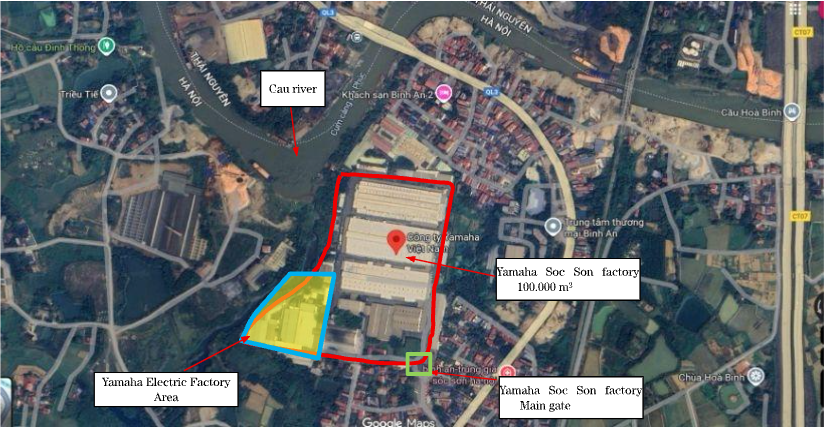
Caption: Satellite view of Yamaha factory; the Cau River runs directly behind the plant.
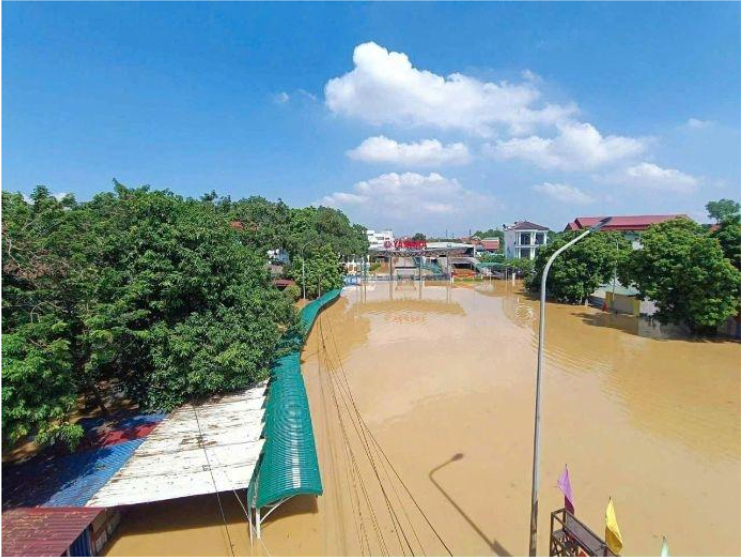
Caption: Yamaha factory main gate flooded during the peak of the event.
Yamaha responded promptly by dispatching a team of experienced Japanese specialists, all with backgrounds in managing natural disasters at factories worldwide. This incident, however, marked the first occurrence of such an event at Yamaha Vietnam. Although the local Vietnamese staff possessed strong skills and dedication, they had not previously encountered a crisis of this nature and therefore relied heavily on the expertise of the visiting specialists.
Upon arrival, the factory environment was tense yet optimistic. The power supply remained unstable, and air conditioning was unavailable. Documents and paperwork were spread throughout the yard to dry in the sun, clearly illustrating the extent of the disruption. Because of the security measures at the factory, I was unable to take any pictures; however, the environment appeared somewhat cluttered.
Communication was one of the biggest challenges. The Japanese specialists and the Vietnamese team did not share a common language, and important information was often slow or unclear. I had to step in constantly — not just to translate words, but to make sure both sides truly understood what the other was trying to say and what needed to be done first.
At the same time, the TTVN Machinery team quickly reached out to TMAC Japan to seek technical advice and worked closely with Yamaha Motor to arrange on-site support. Everyone shared the same simple goal: to get the factory running again as soon as possible.
On the first day, the pressure was intense. The problems were not only with damaged equipment, but also with stress, uncertainty, and miscommunication. In many meetings, I found myself bridging more than just language — I had to convey the urgency, the concerns, and sometimes even the emotions on both sides so that we could move forward together.
The team meticulously assessed the flooded shop floor, cataloguing all damaged machines and components. When Yamaha requested urgent replacement parts, immediate contact was made with TMAC Japan to confirm supply availability, while import procedures were expedited in collaboration with our Machinery Department. As a result of effective cross-border teamwork, a quotation was delivered to Yamaha within one day, which was promptly accepted.
A command center was set up in a small 10-square-metre space for coordinated recovery actions with Japanese specialists. I was proud to join YMC members there as real teamwork developed.
Initially, interactions with the Yamaha team were formal and reserved; however, collaboration fostered increasingly open and collegial communication. Notably, opportunities arose to introduce TTVN’s capabilities and other services, further strengthening relationships and integration with the broader Yamaha organization.
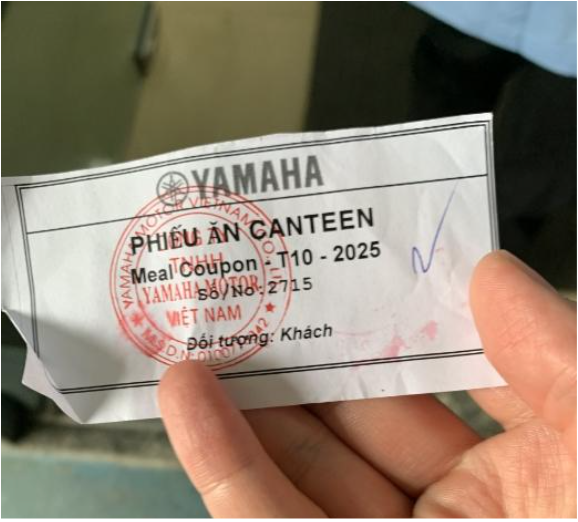
Caption: Meal coupon at Yamaha—being welcomed like a member and bonding
over close conversations.
A special memory was receiving a meal coupon at the Yamaha factory—being welcomed like a member; shared meals and close conversations helped me grasp the team’s culture and solidarity.
As the days went by, trust grew. Whenever a new issue arose, the Yamaha team would come to me first—not just for translation, but for advice and partnership. Through these conversations, I was able to introduce colleagues from other departments, opening doors for future collaboration.
Looking to the future, this experience has opened up new doors for collaboration between TTVN and Yamaha. Through the trust and understanding built during the crisis, I was able to introduce colleagues from other TTVN departments and highlight the broader capabilities of our company. These conversations have already sparked interest in areas such as plastics, chemicals, metal, supply chain where TTVN can provide further value to Yamaha. I am confident that the relationships and mutual respect forged during this challenging time will lead to even stronger partnerships and innovative projects in the years ahead. What began as a response to adversity has become the foundation for long-term cooperation and shared success.
Looking back, this experience was a true example of Toyota Tsusho’s DNA:
- Humanity: Supporting each other, building trust, and growing closer through shared challenges.
- Gembality: Being present at the site, seeing the real situation, and acting together.
- Beyond: Turning a crisis into an opportunity to strengthen relationships and create new possibilities for the future.
From a difficult situation, we built not only solutions, but also friendships and new opportunities—proof that even in adversity, collaboration and openness can lead to lasting success.
To conclude, I’d like to share a photo taken at the main gate of the Yamaha Soc Son factory (where the photo above is all river water in October) in July 2025 during our factory visit.
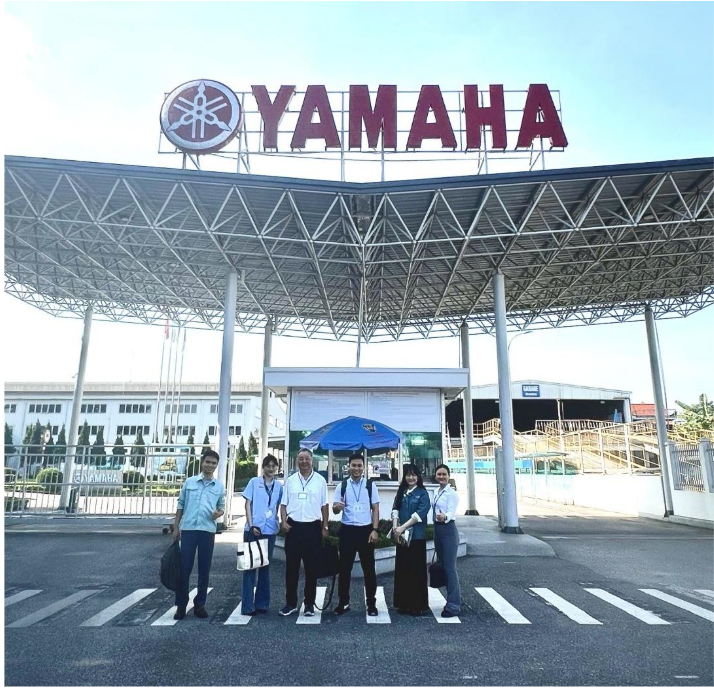
From left to right: Mr. Tuan Anh (TTVN), Ms. Hien (YMVN), Mr. Yamada (TMAC), Author,
Ms. Quynh (TTVN), and Ms. My (TTVN).
From Floodwater to Trust – A Gemba Story at Yamaha Vietnam
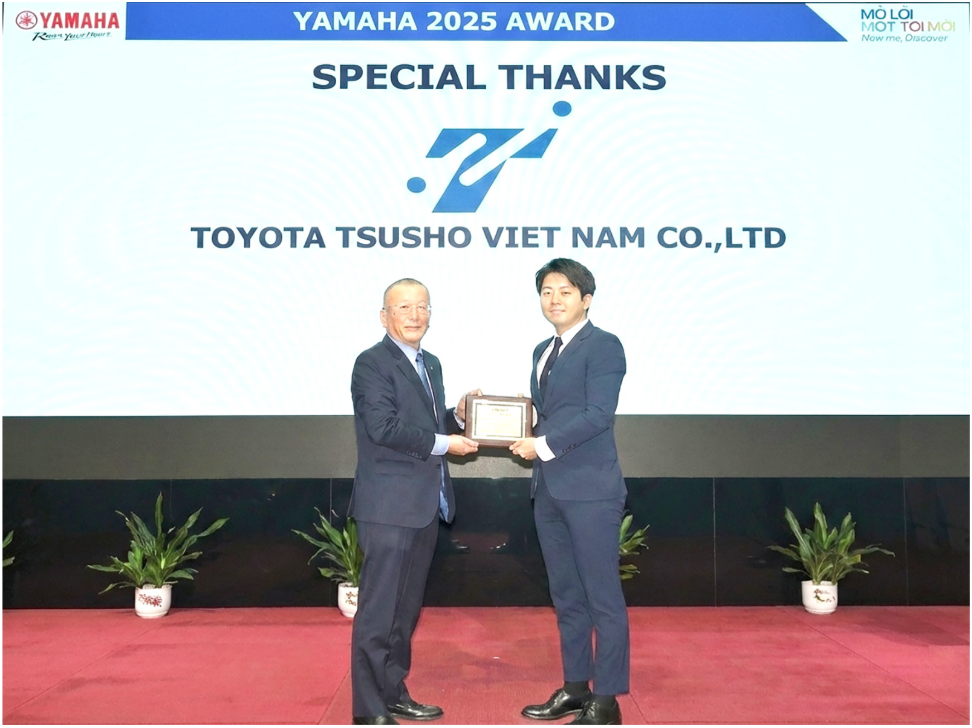
(January 23rd, 2026, “Special Thanks” award from Yamaha)
From left to right in the photo: Yamaha Motor Vietnam, General Director, Okutani-san and TTVN D-SBUH Shimayama-san.
Contributor
Company:Toyota Tsusho Vietnam
Dept:Green Infrastructure Div, Machinery Dep.
Name:Trinh Ngoc Chuc
